
Complainant Demanded Respondent Sell Domain Name or Would Bring UDRP
Most UDRP cases are ”run of the mill” cases that consist mainly of very similar fact patterns which disclose a clear case of cybersquatting. A significant minority however, are laden with unique circumstances, challenging legal questions, or conflicting evidence. Some such complicated or unique cases may be resolvable despite the complexity. Others however, are unclear cases and are unresolvable, or rather ought to be treated as unresolvable by a Panel via the UDRP especially given the limited tools at a Panel’s disposal (See UDRPPerspectives.org at 0.1).
In this particular case, the case was indeed resolvable, but as the Panel pointed out, it took considerable effort to sift through the volume of evidence and arguments made by the respective parties. The Panel’s considerable effort is of course, much appreciated as it contributes to not only justice in the particular case, but more generally as well to the jurisprudence. This case appears to have been exceptionally argued by the Respondent’s counsel, our Editor, Ankur Raheja. Congratulations to him and his client, both of whom are ICA members… Continue reading commentary here.
 Register here
We hope you will enjoy this edition of the Digest (vol. 5.43) as we review these noteworthy recent decisions with expert commentary. (We invite guest commenters to contact us):
‣ Complainant Demanded Respondent Sell Domain Name or Would Bring UDRP (edmi .com *with commentary)
‣ Both Complainant and Respondent Use Descriptive Term (metalposter .com *with commentary)
‣ How Long Do URS Decisions Have to Be? (alberteinstein .shop *with commentary)
‣ Panel: Descriptive Use of “Him” and “Her” and No Intent to Exploit Complainant’s Marks (4him4her .com *with commentary)
‣ Impersonation with disputed domain harms business and exploits trademark (sìemens .com *with commentary)
‣ Non-commercial Free Speech: No Impersonation of Complainant or its ARC Marks (arcreadingpictures .com)
Complainant Demanded Respondent Sell Domain Name or Would Bring UDRP
EDMI LIMITED v. Domain Admin, WebDesign HQ, WIPO Case No. D2025-2151
<edmi .com>
Panelist: Mr. Gerald M. Levine, Mr. David Andrew Allison and Mr. Scott R. Austin (Presiding)
Brief Facts: The Complainant is a Singapore public company in the Osaki Electric Co., Ltd group. Founded in Australia as Electronic Design and Manufacturing Queensland, it was renamed Electronic Design and Manufacturing International (EDMI) in 1981 and has since used the EDMI trademark. Its official website for energy and smart metering products is at <edmi-meters .com>. The Complainant holds a number of EDMI and EDMI-formative trademark registrations, in Australia (June 21, 2012); New Zealand (December 21, 2012); and UK (October 18, 2024). The disputed Domain Name was created on September 12, 2020 by Singapore based WebDesign HQ Pte. Ltd. The Response, however, names the registrant as Mr. Aishwin, an Indian resident, and describes the registrant organization as WebDesignHQ “incorporated in Singapore by Mr. Aishwin.”
The Complainant alleges that by incorporating Complainant’s identical registered trademark in its entirety for the disputed Domain Name, the Respondent directly targeted the Complainant and its established trademark rights for Respondent’s financial gain through offering the disputed domain at a highly inflated price. The Respondent, an investor, acquired the disputed Domain Name “due to its inherent value as a pronounceable four-Letter (4L) domain name” as the winning bidder during a public expired domain name auction on September 12, 2020. According to the parties respective email evidence submitted in annexes to the Complaint and the Response and accounts of negotiations for Complainant’s attempt to purchase the disputed Domain Name from the Respondent, on or around May 26, 2022, the Complainant first approached the Respondent to purchase the disputed Domain Name.
The Complainant provides email evidence that the correspondence continued at least through November 2022 to purchase the disputed Domain Name. The Respondent claims that the Complainant omits additional emails in November and thereafter in which a purchase price was agreed to and the Respondent initiated escrow procedures for the payment, but the Complainant backed out and the sale was canceled, as shown in the Respondent’s January 2023 documents. The Complainant had no further correspondence with Respondent until it sent a demand letter to the Respondent on February 24, 2025 that the Respondent cease using the EDMI mark in the disputed Domain Name, and transfer the domain name for USD $5,000, and threatened a UDRP action if not agreed within seven days. The Respondent refused, and this UDRP proceeding ensued.
Held: The Respondent’s evidence shows that its “pronounceable four letter (4L) brandable domain business”, of buying, developing, and reselling pronounceable four-letter brandable domain names, which are scarce and attractive to startups seeking short, memorable names like the disputed Domain Name. The Complainant has provided no evidence to support Complainant or its mark as “well-known” or widely recognized by media or consumers such that the Panel could reasonably conclude the Respondent had actual knowledge or even reasonably should have known of the Complainant. The financial documents relied on by the Complainant provide no details about itself, its business volume, or its markets. The Panel also referred to the website of the Complainant’s parent, Osaki Electric Co., Ltd., which made no mention of the Complainant. Accordingly, the Respondent has demonstrated that it has rights and legitimate interests in respect of the disputed Domain Name.
The Complainant has further failed to establish on the balance of probabilities that the Respondent registered the disputed Domain Name in bad faith. First, the Respondent acquired the name from a dropped-domain platform that had previously been registered to a different company whose name was also represented by the same four‑letter acronym. Next, the Complainant claims that Consumers and industry stakeholders universally recognize ‘EDMI’ exclusively as the Complainant’s proprietary brand, while the Respondent’s rebuttal to these assertions demonstrates that “Edmi” is used in the market by multiple businesses besides the Complainant and is also used as a personal name. Finally, given the decisions of prior UDRP panels upholding business models for domain name aggregation and resale similar to the Respondent’s as legitimate under the Policy, the Panel finds the Respondent did not act in bad faith in acquiring and offering the disputed Domain Name for resale.
RDNH: The Panel finds that the Complainant should never have brought this case without sufficient evidence in support of its claims and there are no “controverted facts that the Complainant may not have been aware of”. However, it is surprising to the Panel that the Complainant has provided no independent evidence of its reputation in the market, but would have us accept that it was a major contributor to the success of its Japanese parent.
Given the salient facts that the Complainant approached and initiated purchase negotiations with the Respondent without claiming statutory rights. After months of haggling, a price seemed agreed but the sale never closed. The Complainant walked away, returned years later demanding a low price and, when refused, filed a UDRP claim alleging cybersquatting.
The Panel also gives weight to Respondent’s declaration that he had no knowledge of the Complainant or its EDMI Mark at the time he acquired the disputed Domain Name. Under these circumstances the Panel finds Reverse Domain Name Hijacking given the Complainant was not justified in bringing this Complaint based on a reasonable belief that it had a plausible legal basis.
Complaint Denied (RDNH)
Complainant’s Counsel: Amica Law LLC, Singapore
Respondent’s Counsel: Cylaw Solutions, India
Case Comments by ICA General Counsel, Zak Muscovitch:
The Panel notably remarked on the “multitude of facts submitted by both parties, at times conflicting”, which “required extensive and careful review of the materials submitted by each member of the Panel”. The Panel further noted that “its review required an extended amount of time” however “the time devoted to the care and treatment of each party’s arguments and unique facts in support of their position is warranted”.
Most UDRP cases are ”run of the mill” cases that consist mainly of very similar fact patterns which disclose a clear case of cybersquatting. A significant minority however, are laden with unique circumstances, challenging legal questions, or conflicting evidence. Some such complicated or unique cases may be resolvable despite the complexity. Others however, are unclear cases and are unresolvable, or rather ought to be treated as unresolvable by a Panel via the UDRP especially given the limited tools at a Panel’s disposal (See UDRPPerspectives.org at 0.1).
In this particular case, the case was indeed resolvable, but as the Panel pointed out, it took considerable effort to sift through the volume of evidence and arguments made by the respective parties. The Panel’s considerable effort is of course, much appreciated as it contributes to not only justice in the particular case, but more generally as well to the jurisprudence.
This case appears to have been exceptionally argued by the Respondent’s counsel, our Editor, Ankur Raheja. Congratulations to him and his client, both of whom are ICA members.
One aspect of this case that I found particularly noteworthy was the Panel’s affirmative finding of the Respondent’s rights and legitimate interests in the Domain Name. I have long noted that some Panels appear reluctant to make an affirmative determination that a Respondent has rights and a legitimate interest. This is often done for reasons of judicial economy, as strictly speaking a case can be dismissed on one prong of the three-part test and therefore the decision need not address any additional, extraneous grounds. Nevertheless, Panelists should generally make an affirmative finding of rights and legitimate interest if the facts so warrant, due to the implicit obligations of Rule 4(c).
Nevertheless, Paragraph 4(c) of the Policy expressly entitles a Respondent to “prove” its rights and legitimate interests and implicitly directs a Panel to make such a finding if so proven:
“How to Demonstrate Your Rights to and Legitimate Interests in the Domain Name in Responding to a Complaint. When you receive a complaint, you should refer to Paragraph 5 of the Rules of Procedure in determining how your response should be prepared. Any of the following circumstances, in particular but without limitation, if found by the Panel to be proved based on its evaluation of all evidence presented, shall demonstrate your rights or legitimate interests to the domain name for purposes of Paragraph 4(a)(ii):…”
A Respondent who has had its bona fides challenged and been falsely accused of what essentially amounts to a type of fraud, may deserve some vindication and confirmation of their rights and interests as the Policy provides for.
Fortunately, in this case, the Panel did not skip over the Policy’s provision affording the Respondent the opportunity to have its rights and legitimate interests affirmatively determined, and the Panel deserves a lot of credit for so doing. The Panel did not just take the easy way out of finding that ‘the Complainant did not meet its burden under Paragraph 4(a)(ii), but appropriately took it a step further and abided by the express provisions of the Policy as noted above. Well done.
Both Complainant and Respondent Use Descriptive Term
<metalposter .com>
Panelist: The Honorable Neil Anthony Brown KC
Brief Facts: The Complainant is a United States company engaged in the provision of an art market and print-on-demand technology and it has been so engaged since 2006. The Complainant uses the domain name <metalposters .com> as a marketplace for its contributors to upload their images, set prices to sell their images as prints or print-on-demand products and then sell those products. The disputed Domain Name <metalposter .com> was acquired by the Respondent on August 27, 2024. The Complainant alleges that the disputed Domain Name was registered and has been used in bad faith, as the Complainant has strong common law rights in the METAL POSTERS trademark, it has used the domain name consistently in commerce since October 2023 and the Respondent has copied the Complainant’s website at <metalposters .com> for a highly similar business at <metalposter .com>.
The Respondent contends that the Complainant has not proved that it has a registered trademark or unregistered or common law trademark rights for METAL POSTERS which is a descriptive term that lacks inherent distinctiveness. The Respondent began using the disputed Domain Name in its business in March 2025 and has continued such use to the present day exclusively in the metal poster segment of industry. The aforesaid use of the domain name by the Respondent in its business commenced prior to notice of the dispute and accordingly constitutes the use of the domain name for a bona fide offering of goods or services within the meaning of Policy 4(c)(i). Nor has the Respondent used the domain name in bad faith but rather has used it legitimately in connection with its metal poster business and its website is materially and visually distinct from the Complainant’s website.
Held: There is no evidence that the Complainant “has” a registered trademark and consequently, if the Complainant is to get to first base, it must establish that it “has” an unregistered or common law trademark. In the present case, the words “METAL POSTERS”, which clearly mean posters made of metal, do not identify the goods or services of the Complainant, or to put it in different words, they are not inherently distinctive of the Complainant’s goods and services but merely describe them. The Complainant asserts in the Complaint that METAL POSTERS is its trademark. Beyond that assertion, however, there is little if any evidence that the term is used as a trademark to distinguish itself from other providers of metal posters of which, as will be seen, there are many.
The panel also notes from an internet search under “Metal Posters” that the product is produced under that name by a very extensive list of producers including MyPictures, Photobook Australia, Prints and Signs International, LLC and many others. They all offer for sale metal posters, but none of them claims the term as a trademark, no doubt because it is not a trademark. Thus, the conclusion has to be that the Complainant has not made out a case on the normal tests for an unregistered or common law trademark for METAL POSTERS. Thus, as the Complainant does not have a registered or common law trademark, it has not been able to prove Policy 4(a)(i) to give it standing to institute this proceeding and the proceeding must therefore fail.
Moreover, the evidence is that the Respondent was well-embarked on this activity before it received any notice from the Complainant of the dispute. Thus, as well as having a right and legitimate interest in the domain name. Further, the Complainant submitted that the Respondent in effect copied its, the Complainant’s, website and that it was “highly similar”. The Panel does not find that at all; the real difference is that the Respondent’s site deals solely with metal posters, whereas the Complainant’s site deals with a vast range of posters. Furthermore, the business models differ: the Complainant facilitates transactions “between independent buyers and sellers”, whereas the Respondent markets and sells metal posters. There is no evidence of bad faith; the Respondent was conducting a regular business and chose a Domain Name reflecting the goods it was selling.
RDNH: The Panel has no wish to criticize the Complainant, but the discretion to make a finding of Reverse Domain Hijacking is in the Rules to deter claims being made which a complainant knew or, properly advised, should have known could not succeed and to preserve the integrity of the system. The requirement for a trademark is pivotal to the entire UDRP structure and the Complainant should have known that the plain words of the Policy required it to prove this element. The Complainant did not do this and, more egregiously, did not try to do so.
Instead, it advanced the case that it had a common law trademark because it says so. It must therefore have known or should have known that the case could not succeed and yet it brought the proceeding, necessarily involving the Respondent in time and cost. Such conduct has frequently been described as being in bad faith. Accordingly, in all the circumstances, the Panel exercises its discretion by declaring that the Complainant was brought in bad faith and constitutes an abuse of the administrative proceeding.
Complaint Denied (RDNH)
Complainant’s Counsel: Mari-Elise Paul of McBrayer PLLC, USA
Respondent’s Counsel: Chao RU of Ruyuan IP Agency, China
Case Comments by ICA General Counsel, Zak Muscovitch: It is very frustrating to see a company attempt to monopolize a term that describes its product or services. Such was the apparent case here. The Complainant markets metal posters, i.e. images printed onto metal, as does the Respondent. Their respective screenshots are appended below. Clearly both use the term descriptively.
When it comes to descriptive terms, evidence required to show acquired distinctiveness or “secondary meaning” is directly proportional to the degree of non-distinctiveness of the mark at issue. Panels should be wary of easily conferring common law rights upon complainants where the claimed trademark comprises what appears to be a mere common descriptive term. In such cases, the conferral of common law rights upon a merely descriptive term may serve to unjustifiably provide standing to a Complainant under the Policy when in reality the Complainant is just one of many users of a common descriptive term in the marketplace. As Lord Herschell in Eastman Photographic Material Co., Ltd. v. Comptroller-General of Patents, Designs and Trade Marks, [1898] AA.C. 571 at p. 580: “The vocabulary of the English language is common property: it belongs alike to all; and no one ought to be permitted to prevent other members of the community from using it for purposes of description, a word which has reference to the character of quality of the goods.”
Fortunately, the Panel in this case deftly held the Complainant to the appropriate standard for conferring common law rights upon an otherwise overtly descriptive term that is crucial to all traders of metal posters. As the Panel duly noted, “in the present case, the words “METAL POSTERS”, which clearly mean posters made of metal, do not identify the goods or services of the Complainant, or to put it in different words, they are not inherently distinctive of the Complainant’s goods and services but merely describe them. Thus, a complainant in that position must adduce evidence that the words also have a secondary meaning which achieves the objective of identifying the goods and services as being those of the Complainant.” Precisely. As the Panel also noted, “it appears that the expression “metal posters” is generally seen in the community as a description of a type of product produced by many different providers and as not identifying any one producer rather than others”. Indeed.
Moreover, the Panel duly found, that the Complainant engaged in Reverse Domain Name Hijacking because it brought a case over what is clearly the most apt descriptive term in its industry – as easily demonstrated by the Complainant’s own website which advertises “metal posters”.
How Long Do URS Decisions Have to Be?
The Hebrew University of Jerusalem v. Private WHOIS, NAF Claim Number: FA2510002181751
<alberteinstein .shop>
Panelist: Ms. Sandra J. Franklin
Findings of Fact: The Respondent uses Complainant’s registered mark in the domain name to compete with the Complainant. Even though the Respondent has defaulted, URS Procedure 1.2.6, requires the Complainant to make a prima facie case, proven by clear and convincing evidence, for each of the three elements to obtain an order that a domain name should be suspended.
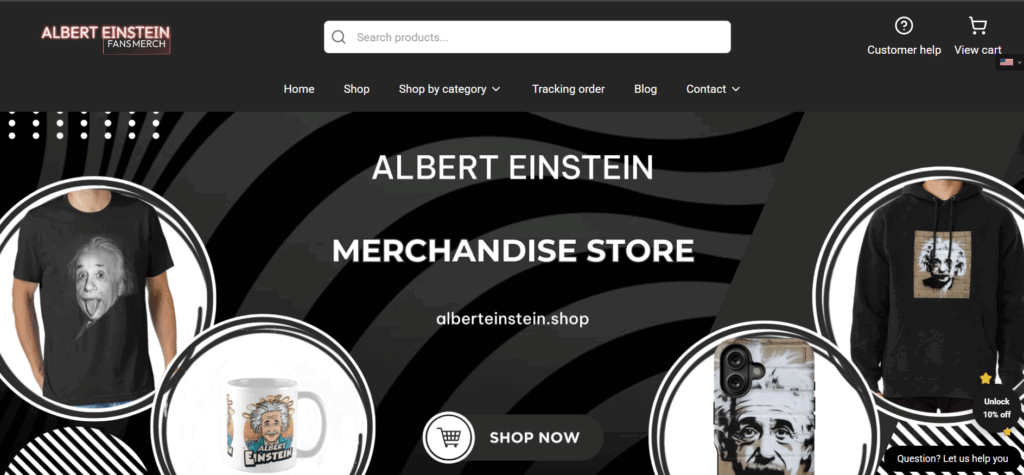
The Complainant, holding a valid and active trademark, filed a URS complaint against the Respondent over the domain <alberteinstein .shop> alleging unauthorized use of the registered mark. Despite the Respondent’s default, the Examiner found that the Complainant made a clear and convincing prima facie case for all three required elements: the domain name was identical or confusingly similar to the Complainant’s mark, the Respondent had no legitimate rights or interests in the domain, and the domain was registered and used in bad faith to compete with the Complainant, under URS 1.2.6.3.d (“By using the domain name Registrant has intentionally attempted to attract for commercial gain, Internet users to Registrant’s web site or other on-line location, by creating a likelihood of confusion with the complainant’s mark as to the source, sponsorship, affiliation, or endorsement of Registrant’s web site or location or of a product or service on that web site or location.”)
Consequently, the Examiner orders the suspension of the disputed domain for the duration of its registration term.
Suspension
Complainant’s Counsel: CMG Worldwide, Inc. Mark Roesler of Beverly Hills, USA
Respondent’s Counsel: No Response
Case Comments by ICA General Counsel, Zak Muscovitch: The URS has never really gained any traction. It is a convoluted system that is difficult to navigate and provides a generally unsatisfactory remedy when compared to the UDRP. That is why it has seen very little uptake by Complainants.
This case caught my attention however, because I found the decision to lack a satisfactory explanation for its disposition. URS decisions are supposed to be brief, but how brief? The URS Rules require that an Examiner provide the reasons on which it is based. Here, the Panel did not identify the trademark registrations relied upon by referencing the trademark registration number. Beyond citing the URS Policy itself, the entirety of the Panel’s explanation for its determination on bad faith, was: “Respondent uses Complainant’s registered mark in the domain name to compete with Complainant”. With such little information provided, it is difficult to follow and appreciate the basis for the decision. It would not take much more effort for a URS Panelist to actually explain what occurred in this case. Without such minimal explanations, URS decisions simply do not appear credible.
Panel: Descriptive Use of “Him” and “Her” and No Intent to Exploit Complainant’s Marks
Hims, Inc. v. Daniel Sandvik, Vitamail AS, WIPO Case No. D2025-3567
<4him4her .com>
Panelist: Ms. Rebecca Slater
Brief Facts: The US Complainant conducts its business through the website at the domain name <hims .com>. It provides a digital health platform that connects users with licensed healthcare providers. The Complainant holds the US registrations for HIMS word mark (May 14, 2019); and for HIMS & HERS word mark (December 5, 2023). The Respondent is a health food company founded in 2009 in Norway. The Respondent holds the EU trade mark registration for 4 (October 12, 2023) which it uses as the main branding element for its products.
The disputed Domain Name was acquired by the Respondent in July 2023 and currently resolves to a website that offers supplements for men and women for sale. The Complainant alleges that the Complainant has a good faith belief that the Respondent intended to transfer the disputed Domain Name to the Complainant for valuable consideration in excess of the Respondent’s out-of-pocket costs directly related to the disputed Domain Name. The disputed Domain Name has active MX and SPF records which might be used to perform a phishing attack against the Complainant.
The Respondent contends that the trade mark HIMS is not a normal English word and is very unusual, and that they do not use any sign or domain name containing HIMS. Rather, the Complainant is trying to interfere with the descriptive use of the word “him” through asserting rights in the HIMS trade mark. The Respondent further contends that the distinctiveness of the Respondent’s branding relates to the use of the digit 4. The “him” and “her” elements of the Respondent’s branding are non-distinctive and descriptive. The Respondent requests a finding of reverse domain name hijacking.
Held: Paragraph 4(b)(i) provides that it will be evidence of a respondent’s bad faith where there are circumstances indicating that the respondent has registered or acquired the domain name primarily for the purpose of selling, renting, or otherwise transferring the domain name to the complainant who is the owner of the trade mark or service mark or to a competitor of that complainant, for valuable consideration in excess of the respondent’s documented out-of-pocket costs directly related to the domain name. The Complainant contends that this is the case here but has provided no evidence to support this contention.
Moreover, the Respondent provided evidence showing that it had been contacted by the Complainant prior to filing of the Complaint, and in its reply asserted that it has been using the elements “him” and “her” descriptively for its products intended for men and women. At no point did the Respondent offer to transfer the domain name to the Complainant. The Complainant has not provided any other evidence of bad faith registration or use. In light of the above, the evidence in the case file as presented does not indicate that the Respondent’s aim in registering the disputed Domain Name was to profit from or exploit the Complainant’s trademarks.
RDNH: Not discussed
Complaint Denied
Complainant’s Counsel: Protakedown Pte. Ltd d/b/a PhishFort, Singapore
Respondent’s Counsel: Page, White & Farrer Limited, United Kingdom (“UK”)
Case Comments by ICA General Counsel, Zak Muscovitch: Notably, RDNH was expressly requested by the Respondent, as noted in the Panel’s decision. Curiously however, there does not appear to be any discussion or finding of RDNH.
As noted in UDRPPerspectives.org, declarations of Reverse Domain Name Hijacking play a critical role in the UDRP by deterring abusive use of the Policy and preserving the integrity of the UDRP for legitimate claims.
A Panel will not have satisfactorily discharged its duty under the UDRP without an express consideration of RDNH where the facts and circumstances warrant. This is so, not just because of Rule 15(e) which requires a Panel to consider RDNH, but also because RDNH is essentially a kind of “counterclaim” that the Respondent is entitled to adjudication of. Even when RDNH is not expressly requested by a Respondent – indeed even in ‘no response’ cases – a Panelist must still consider RDNH where appropriate. If a Panel determines that RDNH is not appropriate it need not make the finding of course. But where it is expressly requested generally a Panel should expressly consider it in the decision, even if it is ultimately rejected.
Impersonation with disputed domain harms business and exploits trademark
Siemens Trademark GmbH & Co. KG v. Arjun Garg, CAC Case No. CAC-UDRP-107908
<sìemens .com>
Panelist: Ms. Stefanie Efstathiou LL.M. mult.
Brief Facts: The Complainant is a trademark holding company, licensing the trademarks at issue within Siemens Group. The Complainant is a subsidiary of Siemens Aktiengesellschaft (AG), which is the ultimate mother company of the Siemens Group. The Siemens Group is one of the world’s largest corporations, providing innovative technologies and comprehensive know-how to benefit customers in 190 countries. The Complainant provides information on its services online inter alia at <siemens .com> and owns numerous domain names with its Trademark. The disputed Domain Name <sìemens .com> was registered on December 6, 2024, and is currently not used in connection with an active website.
The Complainant alleges that the disputed Domain Name was registered and is being used in bad faith. The Respondent must have been aware of the Complainant and its famous trademark at the time of registration of the disputed Domain Name, and the Respondent’s passive holding of the disputed Domain Name, as well as its engagement in fraudulent activities via the related email addresses (hr.talentacquisition@sìemens .com, srikanth.vachaspati@sìemens .com, and nilesh.ramwani@sìemens .com), are evidence of bad faith.
The Complainant, after gaining knowledge of the situation, sent a cease and desist letter to the Respondent on May 28, 2025, to which the Respondent replied by email one day later, claiming to have regretted its actions and undertaking to discontinue its fraudulent activities in the future. Nevertheless, in August 2025, three more phishing incidents coming from the email address hr.talentacquisition@sìemens.com were reported to the Complainant by phishing victims. No administratively compliant response has been filed in these proceedings.
Held: The Panel is satisfied that the Respondent registered the disputed Domain Name with full knowledge of the Complainant and its rights in the Trademark as the Trademark is highly distinctive, famous and globally very well-known. Furthermore, the Panel accepts the Complainant’s contentions that the disputed Domain Name has been used in bad faith. Despite the fact that the disputed Domain Name does not resolve to an active website, the Respondent is using the disputed Domain Name in email addresses and for the purpose of engaging in fraudulent activities, masked behind the name of the Complainant and its business. The Respondent’s use of the disputed Domain Name within the email addresses, in order to impersonate an alleged Siemens talent acquisition specialist, is indeed disrupting the Complainant’s business, harming its reputation, and is taking advantage of its rights in the Trademark.
The Respondent’s practice is very likely aiming to extract sensitive data and payments from the targeted individuals and aspiring applicants to a Siemens position. Panels have held that the use of a domain name for illegal activity, as it was used to send fraudulent emails as part of a phishing recruiting scheme, constitutes bad faith (WIPO Overview 3.0, section 3.4, see Synopsys, Inc. v. Sanskruti Parthe, Case No. D2025-2974, et al.). The unrebutted evidence provided by the Complainant indicates that the disputed Domaix Name has been used to impersonate the Complainant in a fraudulent phishing recruiting scheme. Accordingly, the use of the disputed Domain Name has been made in bad faith. The Respondent failed to file a Response and therefore did not provide evidence of any actual or contemplated good faith use of the disputed Domain Name.
Transfer
Complainant’s Counsel: Internally Represented
Respondent’s Counsel: No Response
Case Comment by Digest Editor, Ankur Raheja: The Panel made a sound decision and recognized the blatant targeting of Siemens’ well-known mark. The registrant’s use of the disputed domain name to impersonate the Complainant’s talent acquisition specialist was indeed “disrupting the Complainant’s business, harming its reputation, and taking advantage of its rights in the trademark.” Such a use cannot confer legitimate rights or interests in the Domain Name. See WIPO Overview 3.0, section 2.13.1: “Panels have categorically held that the use of a domain name for illegal activity (e.g., the sale of counterfeit goods or illegal pharmaceuticals, phishing, distributing malware, unauthorized account access/hacking, impersonation/passing off, or other types of fraud) can never confer rights or legitimate interests on a respondent.” See also CMA CGM v. Diana Smith, WIPO Case No. D2015-1774 (finding that the respondent had no rights or legitimate interests in the disputed domain name, holding that “such a phishing scam cannot be considered a bona fide offering of goods or services nor a legitimate noncommercial or fair use of the Domain Name”).”
Further WIPO Overview 3.0, section 3.4 states: “Panels have held that the use of a domain name for purposes other than to host a website may constitute bad faith. Such purposes include sending email, phishing, identity theft, or malware distribution. (In some such cases, the respondent may host a copycat version of the complainant’s website.) Many such cases involve the respondent’s use of the domain name to send deceptive emails, e.g., to obtain sensitive or confidential personal information from prospective job applicants, or to solicit payment of fraudulent invoices by the complainant’s actual or prospective customers.” See also Stichting BDO v. Contact Privacy Inc. Customer 7151571251/gregory Motto, WIPO Case No. D2022-2023 (“finding the phishing scheme and use of an email address incorporating the disputed domain name to fraudulently obtain payment of invoices to be evidence of bad faith pursuant to paragraph 4(b)(iv) of the Policy for intentionally misleading and confusing the users into believing that the Respondent was associated and/or affiliated with the Complainant”). Also see UDRPPerspectives.org at 3.3.
Non-commercial Free Speech: No Impersonation of Complainant or its ARC Marks
American Reading Company v. L. S., arc reading pictures, WIPO Case No. D2025-3356
<arcreadingpictures .com>
Panelist: Mr. Christopher S. Gibson
Brief Facts: The Complainant, founded over twenty-five years ago, is a literacy company that provides learning curriculum to students and educators, offering instructional manuals, reading programs, and professional learning services. The Complainant’s reading programs are supported by research, independent state reviews, and implementation results across the United States. The Complainant claims that it has gained significant common law trademark rights in its ARC family of trademarks through the use, advertisement, and promotion of the marks in connection with its goods and services. The Complainant has protected many of its ARC-formative marks by filing for and obtaining numerous trademark registrations with the USPTO, comprised of the “ARC” acronym as the dominant portion of the marks, that includes Arc Accelator, Arc Adventures, Arc Press, Arc Reads, Arc University and so on.
The Complainant alleges that the Respondent uses the Domain Name to discredit the Complainant, including inaccurate and misleading claims concerning Complainant and prominently displaying Complainant’s trademarks and copyrighted materials, in direct contravention of the Complainant’s intellectual property rights. Such registration and use of the Domain Name is in and of itself a form of opportunistic bad faith. The Respondent contends that the content on the website linked to the Domain Name consists of factual information and fair criticism of the Complainant’s ARC Core 2017 materials and instructional practices. As a platform for public commentary and review, the site is not a commercial enterprise, does not make any claims to be a commercial enterprise, and does not aim to create consumer confusion. This case would appear to be an attempt to improperly use the UDRP to silence legitimate criticism and public discourse.
Held: The Respondent has responded that the Domain Name (and linked website) have been used for the purpose of criticizing certain of Complainant’s educational materials and instructional practices. The Respondent contends the term “ARC reading pictures” is an explicit criticism of the materials and methods used in Complainant’s 2017 ARC Core program, as it refers to the “three-cueing” method which encourages “reading pictures” instead of decoding words. The Respondent has emphasized that the Domain Name’s website is not a commercial enterprise, does not make any claims to be commercial, does not aim to create consumer confusion, and instead, serves a public interest by providing information to parents and educators regarding instructional materials used in public schools. Moreover, the Respondent has offered to review any specific statements on the site that the Complainant might indicate are inaccurate or misleading.
Section 2.6 of WIPO Overview 3.0 provides relevant guidance for this case, indicating that “UDRP jurisprudence recognizes that the use of a domain name for fair use such as noncommercial free speech would in principle support a respondent’s claim to a legitimate interest under the Policy”. To support fair use under UDRP paragraph 4(c)(iii), the respondent’s criticism must be genuine and noncommercial. Here, the evidence reflects that the Domain Name is not identical to any of Complainant’s ARC trademarks. Instead, the Panel considers whether the phrase “reading pictures” added to the ARC acronym, fairly implies criticism of certain of Complainant’s teaching methods and materials. On balance, the Panel determines that the overall picture portrayed by the Domain Name and associated website does not seek to impersonate the Complainant or its ARC trademarks; rather, the evidence viewed as a whole reflects noncommercial free speech purposes, despite Complainant’s claims to the contrary.
RDNH: The mere lack of success of the Complaint is not, on its own, sufficient to constitute reverse domain name hijacking. WIPO Overview 3.0, section 4.16. Here, the Panel finds that the Complaint was not brought in bad faith and there is no basis for a finding of RDNH.
Complaint Denied
Complainant’s Counsel: Cozen O’Connor, United States
Respondent’s Counsel: Internally Represented
About the Editor:
 Ankur Raheja is the Editor-in-Chief of the ICA’s new weekly UDRP Case Summary service. Ankur has practiced law in India since 2005 and has been practicing domain name law for over ten years, representing clients from all over the world in UDRP proceedings. He is the founder of Cylaw Solutions.
He is an accredited panelist with ADNDRC (Hong Kong) and MFSD (Italy). Previously, Ankur worked as an Arbitrator/Panelist with .IN Registry for six years. In a advisory capacity, he has worked with NIXI/.IN Registry and Net4 India’s resolution professional.